

A Father I Respected but Couldn’t Fully Understand
Growing up, my father was a man I deeply respected. He worked hard, carried responsibility on his shoulders, and made sure we were always safe and provided for.
But he was also quiet. Serious. Most of the time, he wore an expression that looked stern, almost angry. My brothers and sisters would fall silent whenever he walked into the room. Laughter would stop in an instant.
I thought that was just who he was. Fierce. Cold. Distant.
“Children don’t see the burdens their parents carry — only the expressions on their faces.”
Over the years, I unknowingly absorbed his seriousness. I grew up with fear stitched into my personality — fear of speaking up, fear of expressing my ideas, and worst of all, fear of making mistakes.
The First Failure That Shook Me
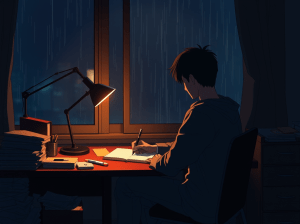
At the age of 12, I faced the final primary school exam — the gateway to boarding school. My dream was to score 5As and secure my place.
But when the results came, I only had 3As.
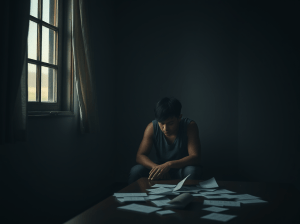
I felt crushed. For days, I couldn’t accept it. When others laughed, I imagined they were laughing at my failure. That moment changed how I saw myself.
“Failure is heavy when you carry it as identity instead of experience.”
Becoming the Father I Feared
Fifteen years later, I became a father myself.
At first, I promised myself I would be different. But little by little, I found myself repeating the same patterns. When I was frustrated, I scolded my son. Later, when my daughter was born, I did the same with her.
And deep down, it hurt me — because I knew how much words could wound. But in the moment, I couldn’t stop myself.
The cycle was repeating.
The Cassette That Revealed Another Side

One day, while cleaning my parents’ house, I found an old cassette tape labeled “Family.”
Curious, I played it. What I heard stunned me.
It was my father’s voice — calm, playful, even laughing while doing chores with my siblings. This was a side of him I had never seen growing up.
That made me pause. Maybe the stern father I knew wasn’t the full picture. Maybe life, responsibilities, or struggles I didn’t know about had changed him.
“Sometimes, what children see as harshness is actually a parent’s way of carrying weight too heavy for young eyes to understand.”
The Wake-Up Call From My Children
The real turning point came when I noticed my children.
One morning, I asked my son if he had eaten breakfast. He replied:
“Yyy-yes… mo-mommy c-cooked rice.”
He had started to stutter.
Later, I noticed my daughter struggling even worse — stuttering and even panicking when I spoke to her.
That moment hit me like lightning. I wasn’t just repeating my father’s habits — I was also passing on the same fear I grew up with.
Breaking the Cycle
I knew something had to change. So I made a decision: I would not let fear be the language my children grew up with.
It wasn’t instant. For almost 5 years, I trained myself — biting my tongue when I wanted to scold, choosing to listen when I wanted to react, and reminding myself that mistakes are not disasters but lessons.
It was hard. Sometimes I failed. But slowly, I saw the shift.
A Mini-Story of Change
One day, my son accidentally spilled a cup of water all over the table. Instinctively, I felt the anger rise, the urge to scold. But I paused. I looked at his face — nervous, expecting the outburst.
Instead, I took a deep breath and said, “It’s okay. Let’s clean this up together.”
The relief in his eyes told me everything. For the first time, he didn’t see fear in my reaction — he saw support. And from that moment on, mistakes in our home became something we solved together, not something to be afraid of.
It wasn’t instant. For almost 5 years, I trained myself — biting my tongue when I wanted to scold, choosing to listen when I wanted to react, and reminding myself that mistakes are not disasters but lessons.
It was hard. Sometimes I failed. But slowly, I saw the shift.
My children went from stuttering and fearful to confident and expressive. They began to laugh freely, share their ideas boldly, and even perform on stage at school events.
That’s when I realized: breaking the cycle is not about being a perfect parent. It’s about being a learning parent.
“You don’t need to erase your past to change your future — you just need the courage to write a different chapter
What Breaking the Cycle Really Means
Looking back, here’s what I’ve learned:
- Cycles are invisible until you see them. Most of us simply repeat what we grew up with. Awareness is the first step.
- Change is slow, but real. It took me years to unlearn my reactions. But every small step counts.
- Compassion goes both ways. I now see my father differently. Maybe he wasn’t cold — maybe he was carrying his own struggles. Understanding that gave me peace.
- Our children don’t need perfection. They need presence, patience, and the freedom to make mistakes without fear.
Final Takeaway
We don’t have to repeat the pain we inherit. We can choose to pause, to reflect, and to change — even if it takes years. Because the moment we do, we’re not just changing our own story. We’re changing the story of generations after us.
“The greatest gift we can give our children is not perfection — it’s freedom from the fears we once carried.”
P/S: My father passed away 20 years ago. If you are reading this, I humbly ask you to pray for him. May Allah grant him forgiveness and place him among the righteous.









 Muiz Aziz
Leave a reply to Kofi Amo-Mensah, MD Cancel reply