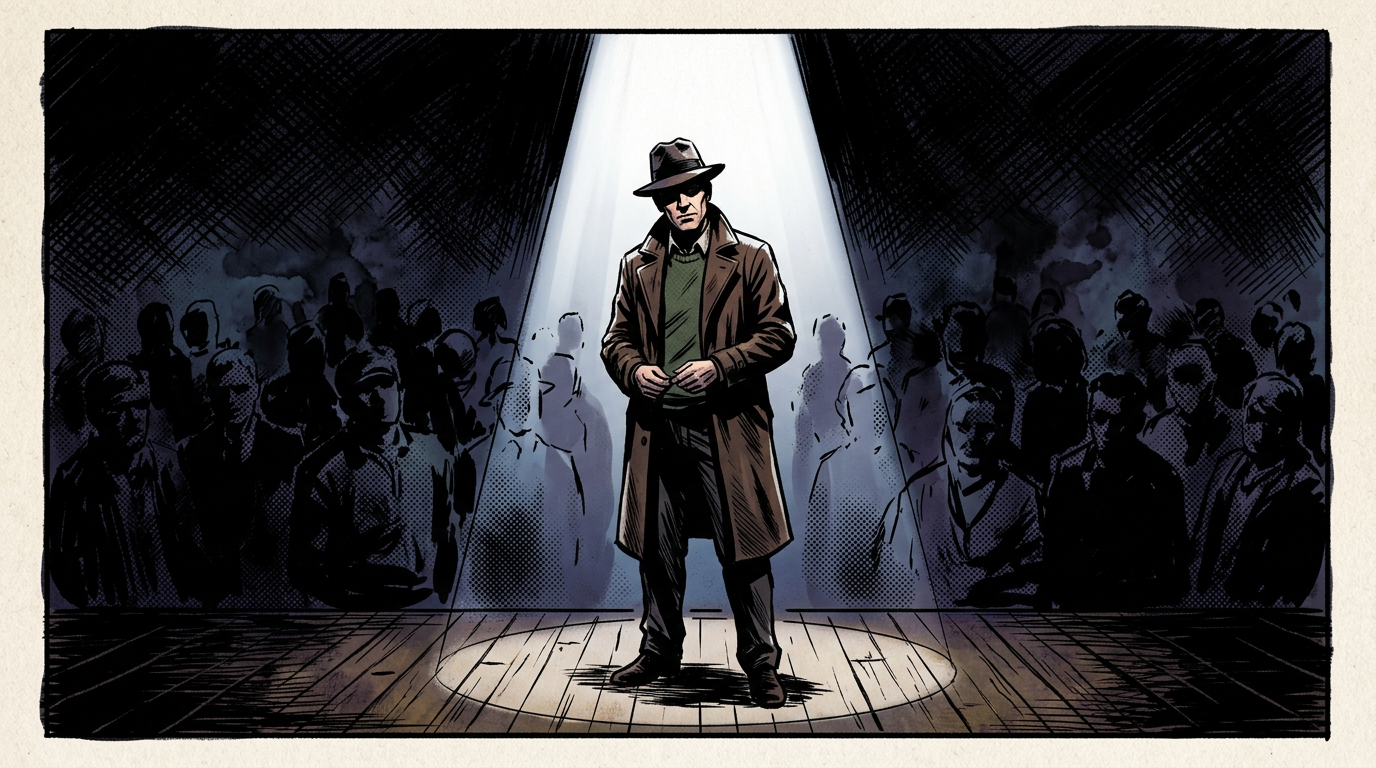
I want to tell you about a day when I felt like hiding my face in a pillow.
I walked into a meeting with my team. Everyone was sitting in front of their laptops. There was a bit of small talk before the meeting started.
Then I noticed two of my colleagues, Ahmad and Nurul (not their real names) whispering to each other.
They laughed quietly. Then, for just a second, they looked in my direction.
And within two seconds, my brain had already written an entire story.
“They’re talking about me.”
“Maybe it’s about yesterday’s presentation that didn’t go well.”
“Or maybe I said something weird during lunch.”
“Or maybe my shirt looks strange today.”
I sat through the meeting trying to focus, but inside my head, I had already entered a full drama.
I was the suspect.
I was the victim.
I was the main character in a story I had written myself.
After the meeting ended, I went to Ahmad and tried to sound casual.
“What were you guys laughing about just now?”
He looked confused.
“Huh? Oh, Nurul showed me a video of a cat falling off a chair. It was hilarious.” – You can view the cat video in my Youtube video embedded above.
A cat.
Not me.
A cat.
And that was when I realized something uncomfortable.
I had just spent one whole hour inside my own head, building a story that had absolutely nothing to do with reality.
All because my brain had automatically placed me at the center of what was happening around me.
That is what people often call Main Character Syndrome.
What Main Character Syndrome Really Means
Main Character Syndrome is a popular term on the internet. It is not an official clinical diagnosis.
But the idea is familiar.
It is when we start experiencing life as if we are the hero in our own movie. Everyone else becomes a supporting character. Every situation feels connected to us. Every reaction feels like it must mean something about us.
Someone does not reply to your message? “They must be angry at me.”
A meeting suddenly feels awkward? “I must have said something wrong.”
People laugh at the end of the corridor? “They must be talking about me.”
But before we reduce this to “people who have big egos,” I think there is something deeper going on. Because Main Character Syndrome is not always about arrogance.
Sometimes, it is about anxiety.
Sometimes, it is not “I am better than everyone.”
Sometimes, it is “Everything bad must somehow be my fault.”
And that version is far more common than we admit.
The Two Types of Main Character Syndrome
When people hear the phrase Main Character Syndrome, they usually imagine someone dramatic, attention-seeking, and self-obsessed.
Someone who always wants to be the center of attention.
Someone who cannot really listen because they are too busy thinking about what they want to say next.
That version exists.
But there is another version that many people do not notice.
It is the person who overanalyzes every negative situation and connects it back to themselves.
Like what happened to me in that meeting.
I was not thinking, “I’m so important.”
I was thinking, “Something bad is happening, and it must be about me.”
Someone compliments you, and you think, “They don’t really mean it.”
Someone goes quiet, and you think, “They’re mad at me.”
The atmosphere becomes slightly awkward, and your brain immediately says, “It must be because of me.”
Both versions look different.
But underneath, they share the same problem: The brain struggles to step outside its own perspective.
Why Our Brain Does This
The first reason is simple.
Our brain is naturally egocentric.
That does not necessarily mean we are selfish. It means we experience the world from our own point of view first.
We are the only “camera” we have.

So by default, we feel like we are at the center of what we experience.
The problem is that we forget everyone else also has their own camera.
And in their camera, we are usually not the main character.
We are just one small part of a much bigger scene.
The second reason is something psychologists call the Spotlight Effect.
Psychologist Thomas Gilovich and his colleagues conducted an interesting experiment. Participants were asked to wear an embarrassing T-shirt and enter a room full of people.

The participants thought many people would notice the shirt.
But in reality, far fewer people noticed than they expected.
That is the Spotlight Effect.
We overestimate how much other people notice us.
We think there is a spotlight constantly shining on us.
But most people are busy standing under their own spotlight.
They are thinking about their own problems, their own insecurities, their own mistakes, their own lunch, their own work, their own lives.
Not us.
The third reason is harder to admit.
Sometimes Main Character Syndrome comes from emptiness.
Not ego.
Emptiness.
Sometimes life feels too ordinary. Too repetitive. Too flat.

So the brain creates drama just to feel like something meaningful is happening.
When we do not feel significant, our mind starts building stories.
At least then, life feels like it has a plot.
At least then, we feel important in what is happening around us.
And this becomes even stronger in the age of social media.
Everywhere we look, other people seem to have highlight reels. Plot twists. Cinematic moments. Big achievements. Emotional captions. Main-character music behind their lives.
Slowly, without realizing it, we start treating our own life like content.
We feel like it needs a narrative.
It needs drama.
It needs something to prove that we matter.
How to Turn Down the Volume
The goal is not to stop being self-aware.
Self-awareness is healthy.
The problem is when self-awareness turns into self-imprisonment.
When we become trapped inside stories our brain created without evidence.
So how do we reduce this?
There are four things that help.
1. Ask Yourself One Simple Question
Whenever you feel like everyone is noticing you, judging you, or thinking about your mistake, pause and ask:
“How often do I think about other people’s small mistakes?”
Seriously.
Think about it.
Your friend said something awkward last week. Are you still thinking about it?
Probably not.
You moved on.
You have your own life. Your own problems. Your own things to worry about.
And that is exactly what other people do with your mistakes too.
They move on.
This small reality check can break the story loop your brain is building.
2. Practice Decentering
Decentering is a technique often used in Cognitive Behavioural Therapy.
It means learning to step outside your own perspective.
When your brain starts building a story, pause and ask:
“If I am not the main character in this situation, what else could be happening?”
Ahmad and Nurul are whispering and laughing?
Maybe they are talking about a Korean drama.
Maybe they are sharing an inside joke.
Maybe someone sent them a funny meme.
Maybe, as in my case, it was just a video of a cat falling off a chair.
The point is not to force yourself to think positively.
The point is to train your brain to create more than one interpretation before settling on the one that makes everything about you.
3. Shift Your Focus From Yourself to Others
Imagine two people entering the same room.
The first person walks in thinking:
“Do I look okay?”
“Is my outfit weird?”
“If I say something, will people judge me?”
The second person walks in thinking:
“Who here have I not spoken to yet?”
“Is anyone standing alone?”
“Who might need someone to talk to?”
Same room.
Same event.
Completely different experience.
The first person is physically in the room, but mentally trapped inside their own head.
The second person is actually present. They notice people. They connect.
And here is the interesting part.
The people we remember most in social situations are usually not the most attractive, the smartest, or the funniest.
They are the people who make us feel seen and heard.
So one of the easiest ways to reduce Main Character Syndrome is to stop asking:
“What do people think about me?”
And start asking:
“What does this person need from this conversation?”
That small shift can change the way you show up in other people’s lives.
4. Build Meaning That Does Not Need an Audience
This is the deeper solution.
If the brain creates drama because life feels empty, then the long-term answer is not more attention.
It is meaning.
Viktor Frankl, the psychiatrist and Holocaust survivor who wrote Man’s Search for Meaning, believed that human beings can endure almost anything when they have a reason why.
When you have something you genuinely care about — a project, a relationship, a craft, a responsibility, a purpose — your brain does not need to create fake drama just to feel important.
Your sense of importance starts coming from within.
You no longer need to be seen by everyone to feel that your life matters.
You no longer need to be the hero in someone else’s story.
You can simply live your own life with more steadiness.
More presence.
More freedom.
The Relief of Not Being the Main Character
When I finally understood this, I did not feel small.
I felt relieved.
Because when you stop being the hero in everyone’s story, you also stop being the victim in everyone’s story.
Not everyone is judging you.
Not everyone is thinking about your mistakes.
Not everyone is waiting for you to fail.
Most people are busy with their own spotlight.
And that means you are free. Free to be present. Free to connect with people more genuinely. Free to build a meaningful life, not because people are watching, but because you chose it.
Your life matters.
Not because you are the main character in every situation. But because you are part of a much bigger story than your brain can imagine.
So here is one question worth thinking about:
When was the last time you created a story in your head about a situation that, in the end, had nothing to do with you?



Leave a Reply