
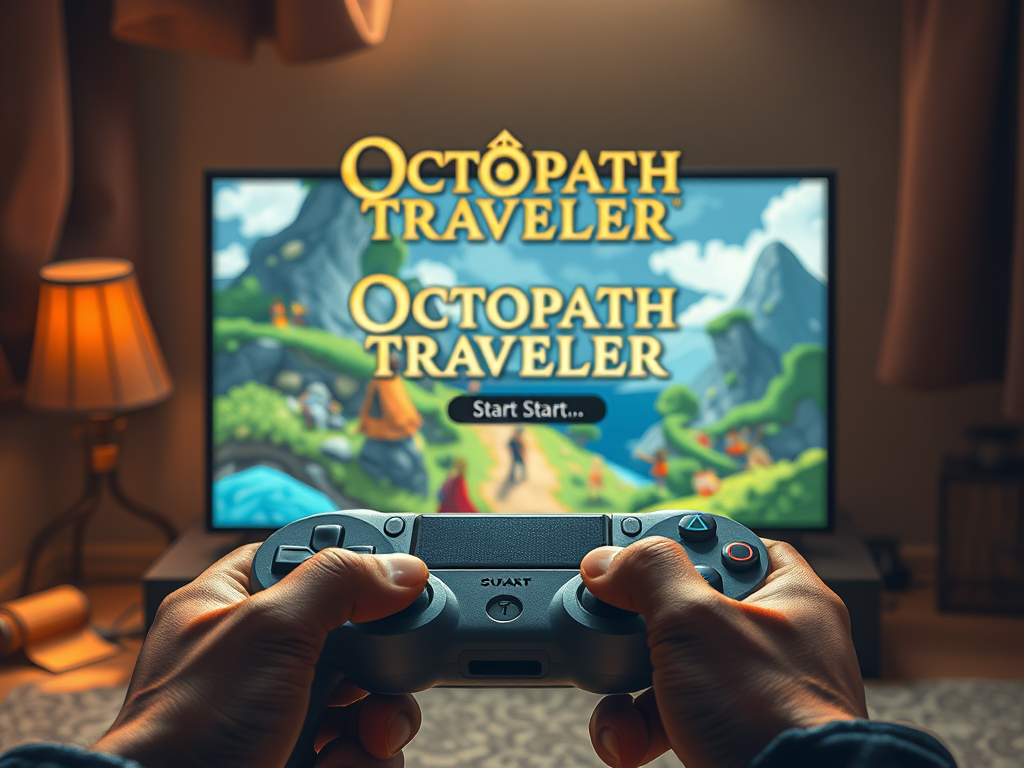
There was one game on my Nintendo Switch that I postponed for almost five years.
Its name was Octopath Traveler.
If you’ve ever seen this game, you’ll understand why I was attracted to it. The pixel art graphics are beautiful, the soundtrack is incredible, and the story is really deep.
When I watched the trailer back then, I immediately thought:
“This is definitely a game for me.”
I bought it.
I downloaded it.
And after that… I never touched the game at all.
For five years.
Not because I lost interest.
Not because I didn’t have time.
But every time I thought about starting the game, this strange feeling would come and make me stop for a while.
“Later.”
“Maybe this weekend.”
“After I finish my work first.”
And the weekends came and went like usual… for five years.
I still didn’t play the game.
When I Finally Started the Adventure
Last week, something interesting happened.
I was sitting with my son, and he looked bored. So I suggested that he try playing Octopath Traveler.
He took the controller and started playing.
Two hours non-stop.
I sat there watching him play. After he finished, I took the controller and tried it myself.
And for the first time in five years, I entered the world of Octopath Traveler.
And I got stuck there for a few hours.
At that moment, one question suddenly came to mind:
“Why did I delay this game for five years… but that day, I could start it in just five minutes?”
When I thought about it again, I realized something.
The answer wasn’t really about the game.
The answer was about how our brain works when we want to start something.
We Often Misunderstand the Real Problem
Think about it.
How many things in life do we actually want to do, but never start?
The workout we plan every week.
The book we bought but still haven’t read.
The new skill we want to learn but never begin.
In situations like this, many people immediately blame themselves.
“I’m lazy.”
“I have no discipline.”
But in many cases, the problem is not laziness.
The problem is that the first step feels too heavy..
What Is Activation Energy?
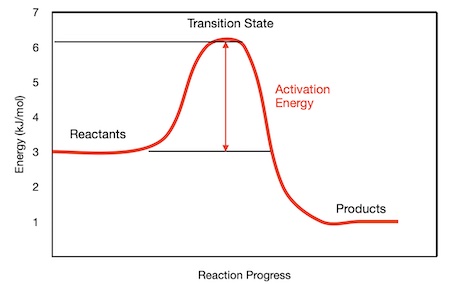
In psychology and behavioural science, there is a concept called activation energy.
The term originally comes from chemistry.
Activation energy refers to the amount of energy needed to start a reaction.
And this concept is actually very relevant to human behaviour.
Every time we want to start something new, our brain makes a quick calculation.
“How much energy is needed to do this thing?”
If the brain feels that the effort required is too big, it will look for an easier alternative.
Not because we are lazy.
But because our brain is designed to save energy.
This is a survival mechanism we inherited from the past.
The problem is, in the modern world, that same mechanism sometimes makes it difficult for us to start things that are actually good for us.
Why Was I Able to Start That Day?
If everything is connected to activation energy, why was I able to start playing the game so easily that day?
When I thought about it, I realized there were three things that happened at the same time without me noticing.
1. I Saw Someone Else Do It First
My son played the game in front of me for two hours.
Without realizing it, my brain started processing something.
“Oh… this game is actually not that hard.”
In psychology, this phenomenon is called observational learning.
Psychologist Albert Bandura showed that humans are more likely to try something when they see someone else doing it first.
Sometimes, just by watching someone else do something, our perception of how difficult that activity is can change immediately.
2. There Was No Pressure to Succeed
That day, I had no serious intention of playing the game.
I didn’t think I had to finish it.
I didn’t think I had to be good at it.
I just tried.
When we remove the pressure to perform or succeed, our brain feels safer to try.
In psychology, this condition is called psychological safety.
When we feel safe to try without being afraid of failing, the barrier to starting becomes much smaller.
3. The Friction Had Already Been Reduced
Another important thing was friction.
My son had already taken the first step for me.
The game was already on.
The menu was already open.
All I needed to do was take the controller.
In behavioural psychology, friction refers to the number of steps needed to start an action.
The more steps required, the more likely we are to delay.
The fewer the steps, the easier it is to start.
Four Ways to Make It Easier to Start Something
Once we understand the concept of activation energy and friction, we can actually use these principles to help ourselves start something.
Here are four practical ways that can help.
1. Reduce Friction Before Looking for Motivation
Many people think they lack motivation.
But the real problem is that there are too many steps before they can start.
For example, if you want to work out tomorrow morning, prepare your gym clothes tonight and place them beside your bed. Put your shoes near the door.
When you wake up in the morning, the first step has already been done.
The same goes for reading.
If your book is kept inside a cabinet, the chances of you picking it up are very low.
But if the book is always on your table or beside your bed, the chances of you starting to read become much higher.
2. Use the 2-Minute Rule
David Allen, in his book Getting Things Done, suggests a simple principle.
If something can be done in two minutes, do it now.
This principle can also be used to build a new habit.
If you want to start something, give yourself permission to do it for only two minutes.
Work out for two minutes.
Read one page.
Watch a tutorial for two minutes.
The goal is not to do a lot.
The goal is just to break through the first barrier.
Usually, after we start, we continue.
This phenomenon is connected to something called the Zeigarnik Effect – our brain likes to complete things that have already been started.
3. Use Social Momentum
One reason I was able to start playing the game that day was because my son played it first.
Our environment strongly influences our behaviour.
If you want to start running, join a running group.
If you want to start reading, join a book club.
If you want to learn something, do it with a friend.
When we see other people doing something, it feels more normal and more achievable.
4. Remove the Expectation of Being Perfect
This is probably the thing most people struggle with.
Many people delay something not because they don’t want to do it.
But because they are afraid they won’t do it perfectly.
Not good enough.
Not complete.
Not worth it.
This is actually perfectionism disguised as procrastination.
The truth is simple.
An imperfect workout is better than a workout that never happens.
A book that is half-read is better than a book that is never opened.
A skill learned slowly is better than a skill never learned at all.
Don’t aim for perfect.
Aim to start.
Sometimes We Just Need to Press Start
I delayed one game for five years.
Not because I wasn’t interested.
Not because I didn’t have time.
But because in my head, it felt heavier than it actually was.
When in reality, it only needed one small step.
Take the controller.
Press start.
And when I think about it again, many things we delay in life are exactly the same.
Not because we are incapable.
But because we haven’t made the first step easy enough.
The first workout doesn’t need to be perfect.
The first book doesn’t need to be finished today.
A new skill doesn’t need to be mastered in one week.
Sometimes, all we need is one small decision.
Start.








 Muiz Aziz
Leave a comment